
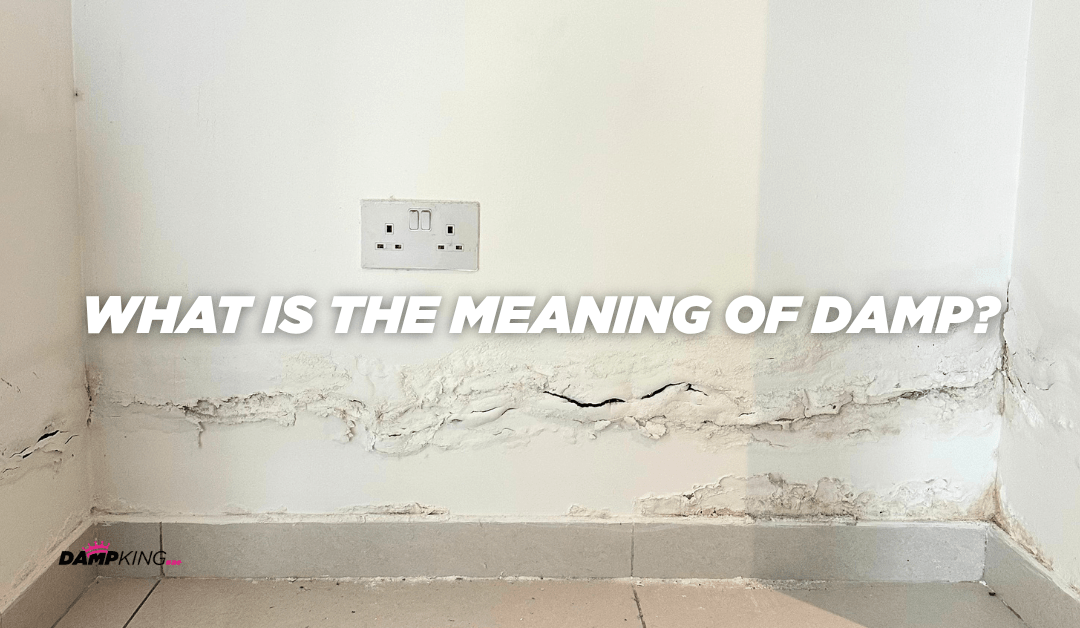
If you’ve noticed a musty smell in a spare room, a brown stain creeping up your skirting board, or paint that’s started to bubble on an otherwise perfectly good wall, you’ve probably typed “what is damp” into Google at some point. It’s a fair question, especially in a city like Dubai, where most people assume the desert climate rules out moisture problems altogether. It doesn’t.
This guide breaks down what damp actually means, the different forms it takes, and why it’s such a common issue in Dubai homes, even though the city sits in the middle of a desert.
What Does “Damp” Actually Mean?
In the simplest terms, damp is unwanted moisture sitting inside the structure of a building. It’s not the same as a puddle on the floor after a leak, and it’s not the same as a wet towel left on the bathroom rail. Damp refers to moisture that has worked its way into your walls, floors, or ceilings and stayed there, often for months, sometimes for years, without anyone noticing until the damage becomes visible.
That moisture has to come from somewhere. It might travel up from the ground, force its way in from outside through a crack or a failed seal, or form indoors when warm, moist air meets a cooler surface. Whichever route it takes, the result is the same: your building materials absorb water they were never designed to hold, and over time, that leads to stains, smells, and structural wear.
The Three Types of Damp, and Why It Matters Which One You Have
Not all damp behaves the same way, and treating the wrong type won’t fix the problem. There are three main categories.
Rising damp happens when moisture from the ground is drawn upward through a wall, a bit like a candle wick soaking up wax. It’s usually limited to the lower section of a wall, close to floor level, and tends to leave a visible tide mark as it dries. This usually happens when waterproofing is missing altogether, has been installed incorrectly, or has failed over time, allowing moisture to enter through external walls and nearby surfaces.
Penetrating damp comes in from the outside. Rainwater, irrigation spray, or moisture from a leaking pipe or roof finds a way through a crack, a gap in the render, or a failed seal, and travels through the wall until it reaches the inside surface. Unlike rising damp, it can appear anywhere on a wall or ceiling, not just near the ground.
Condensation is different again, since it doesn’t come from outside the building at all. It forms when warm, humid air inside your home meets a cold surface, such as a window, an external wall, or a spot where air conditioning has chilled the wall behind a wardrobe. The moisture in the air turns to water on contact, and if it happens repeatedly without adequate ventilation, mould soon follows.
Knowing which type you’re dealing with matters because each one has a different cause and a different fix. Treating condensation as though it were rising damp, or the other way round, means the underlying problem keeps coming back.
“But Dubai Is a Desert, Why Would We Have Damp?”
This is the question we hear more than any other, and it’s a reasonable one to ask. Dubai’s climate, though, is a lot more humid than most people give it credit for. Coastal humidity regularly climbs into the 80-90 per cent range during the summer months, and that moisture-laden air doesn’t stop at your front door.
Dubai properties also work harder than most to manage the gap between scorching exterior temperatures and heavily air-conditioned interiors. That contrast creates cold spots on walls and ceilings, particularly around concrete slabs, window frames, and areas with weaker insulation, and cold spots are exactly where condensation forms. Add in rapid construction timelines, silicone seals that dry out and crack in the heat, and irrigation systems that keep garden beds constantly moist against exterior walls, and it’s easy to see how damp takes hold even in a city surrounded by sand.
What Does Damp Actually Look Like?
Damp doesn’t always announce itself straight away. These are the signs worth watching for around your home:
- Paint that’s started to bubble, blister, or peel away from the wall.
- Brown or yellowish patches spreading across a wall or ceiling.
- A musty, stale smell in a room, even after cleaning.
- Flaking paint or crumbling plaster near skirting boards.
- Black or green mould spots, particularly in corners, behind furniture, or near windows.
- Cold, clammy patches on internal walls.
If any of these sound familiar, it’s worth getting the cause identified rather than simply repainting over it. Painting over damp only hides the problem for a short while. It doesn’t solve it.
Why It’s Worth Taking Seriously
Damp isn’t just a cosmetic issue. Left untreated, it can chip away at your walls and plasterwork over time, meaning you end up repainting and repairing the same spot again and again. It can also affect your health, since damp environments encourage mould growth, and mould spores in the air can worsen respiratory issues for some people, particularly children and those with asthma or allergies.
The good news is that once damp is properly diagnosed and treated at the source, rather than just patched over, it stops coming back.
How Damp King Approaches Damp Proofing in Dubai
At Damp King, we have been treating rising damp, penetrating damp, and the fallout they leave behind – think bubbling paint, mould, and damaged plaster – across Dubai and the wider UAE since 2019. We’ve worked on more than 250 properties, from villas to apartments, and our approach always starts the same way: identifying exactly which type of damp you’re dealing with before we recommend a fix.
Our treatment is non-invasive and doesn’t rely on harsh chemicals. Every property gets a tailored plan based on what we see during a free consultation, not a one-size-fits-all solution. If you’ve spotted any of the signs above, or you’re simply not sure what’s causing a patch on your wall, book a consultation with Damp King, and we’ll help you get to the bottom of it.