
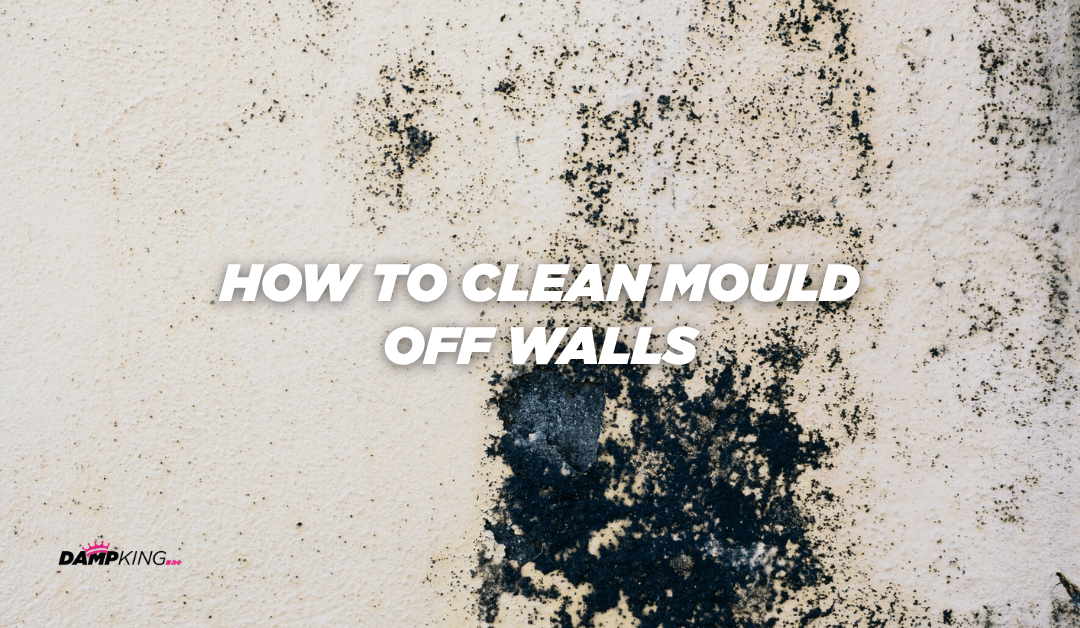
The first thing to understand is that cleaning mould off a wall only removes the visible growth. It does not solve the problem if condensation, dampness, a leak, or trapped humidity is still affecting the wall behind the surface. That is why mould should never be treated as only a cleaning issue. The real question is what moisture source is feeding it.
In Dubai, this matters more than many property owners first expect. A room may feel cool because of air-conditioning, but that does not always mean the wall is dry. Humidity, enclosed indoor living, bathroom steam, condensation on cooler surfaces and hidden moisture around external walls can all create the right conditions for mould to return. That is why Damp King always advises looking at the cause first, not only the mark on the wall.
Why mould grows on walls in the first place
Mould does not appear on a wall for no reason. It grows where moisture stays long enough for spores to settle and spread. In most properties, that moisture comes from condensation, poor ventilation, bathroom steam, plumbing leaks, trapped humidity, damp plaster or water entering through weak points in the wall.
This is why a mouldy wall should not be treated as a basic cleaning problem. In most cases, the wall is signalling a moisture issue somewhere in the room or inside the wall itself. If the visible growth is cleaned but the dampness remains, the same patch can return again and again.
That is also why mould often appears alongside bubbling or peeling paint, musty smells, staining or soft plaster. These signs usually point to a wider moisture problem rather than a simple surface stain.
Can you clean mould off walls yourself?
Sometimes, but mould problems are generally best left to professionals.
Mould can be difficult to deal with properly, and if it is handled the wrong way, the same issue may return while unnecessary health risks are created during the cleaning process. Surface cleaning may improve the appearance for a short time, but if the underlying moisture problem is not found and treated correctly, the wall often starts showing mould again.
In case you decide to try and remove the mould yourself, it should only be considered for a small surface patch on a hard wall where the problem appears limited, and the wall does not show signs of more serious damage. Even then, the moisture source still needs attention afterwards. If the wall feels damp, the area is large, the mould keeps coming back, or the plaster and paint are already failing, it is usually better to stop and get professional help.
People with asthma, allergies, immune sensitivity, chronic lung problems or any higher sensitivity to mould should not take part in mould clean-up, as exposure can make the situation worse.
What should you wear before cleaning mould?
Mould issues are better handled by professionals, because improper cleaning can spread spores, create avoidable health risks and allow the same problem to return. However, if you still decide to try removing mould yourself, proper protection is essential.
Before you begin, protect your skin, eyes and airways. Wear suitable gloves, full eye protection and a proper mask that helps reduce exposure to airborne particles. Ventilate the area well if you are using cleaning products, but also take steps to stop spores spreading through the rest of the property.
Where possible, the affected room should be closed off during the cleaning process. Plastic sheeting can be used to isolate the area and reduce the chance of spores and debris travelling into nearby rooms. It also helps to protect the floor below the affected section so that dirty droplets and loose material do not spread further through the space.
This part should not be treated lightly. Mould cleaning is not the same as wiping a dirty mark off a wall. Once disturbed, mould can release spores into the air, which is exactly what you want to avoid in an enclosed indoor environment.
Should you use vinegar, bleach or a mould cleaner?
The right cleaning method depends on the surface and the condition of the wall, which is one reason mould is not always as simple as it looks at first.
For a small patch on a painted wall, people often use a mild cleaning solution, white vinegar or a suitable mould cleaner made for domestic surfaces. The key point is not only what you use, but how safely and carefully the area is handled. Cleaning products should never be mixed, and stronger chemicals are not automatically the best option for every wall finish.
At Damp King, the advice is to be cautious with any product used on painted or delicate surfaces. The wall should be cleaned in a controlled way, without soaking it unnecessarily or damaging the finish further. More importantly, the wall must be dried properly afterwards. If moisture remains in the surface, the mould may simply come back.
How to clean mould off a painted wall
If you decide to deal with a small surface patch yourself, start by ventilating the room, wearing proper protective equipment and isolating the area as much as possible. Lightly apply your chosen cleaner to the affected patch. The aim is to treat the mouldy surface carefully, not saturate the wall.
Allow the cleaner enough time to work, following the product guidance if you are using a ready-made cleaner. Then wipe or scrub the wall gently with a soft cloth or sponge. Avoid aggressive scrubbing, because that can damage the paint finish and release more particles into the air.
Once the visible mould has been removed, wipe the surface clean and dry it thoroughly. Drying is one of the most important parts of the process. If the wall is left damp afterwards, the same conditions that helped mould grow in the first place may still be there.
What if the mould is on plaster, not just paint?
If the mould has only affected the outer surface, cleaning may help for a short time. However, if the plaster feels soft, crumbly, damp, or stained underneath, the issue may be deeper than a surface wipe-down.
This is where many property owners lose time. The visible mould is cleaned, the wall looks better for a week or two, and then the patch comes back because the plaster is still holding moisture behind the paint. If the same area also has bubbling paint, peeling paint, flaking plaster or a persistent musty smell, the problem usually needs proper damp investigation rather than more surface cleaning.
Why mould keeps coming back after cleaning
Mould returns when moisture remains.
That is the central issue. Bathrooms with poor extraction, wardrobes placed tightly against external walls, cool surfaces around air-conditioning lines, hidden plumbing leaks and weak waterproofing can all create the conditions for repeated mould growth.
Better ventilation can help reduce the build-up of moisture in some rooms, especially in bathrooms and regularly enclosed spaces. However, ventilation alone will not solve a leaking pipe, trapped dampness, rising damp or water entering through a wall. If mould keeps reappearing in the same place, the wall needs to be checked for the real source of moisture.
Should you paint over mould after cleaning?
Not until the mould has been removed properly and the wall is fully dry.
Painting over a mould-affected wall too early often creates more problems. The surface may look better for a short time, but if moisture is still active inside the wall, staining, peeling, bubbling and repeat mould growth can follow.
From Damp King’s professional point of view, the wall should never be covered before the mould problem and the moisture behind it have been addressed properly. A fresh coat of paint does not solve what is happening underneath. It usually only delays the visible signs until they return.
This is especially important in Dubai properties where humidity, cooling systems and enclosed rooms can allow moisture to sit inside a wall even when the room itself feels comfortable.
When you should stop cleaning and call a professional
If the mould patch is large, if the wall feels wet underneath, if the room smells strongly musty, if the mould keeps returning, or if the area also shows paint failure or plaster damage, it is usually time to stop treating it as a simple cleaning job.
The same applies if the mould may be linked to air-conditioning moisture, hidden leaks, bathroom waterproofing problems, external water entry or rising damp. In these cases, the visible mould is only the surface symptom. The more important issue is the moisture behind it.
For Dubai homes, this matters because cooling, humidity and hidden moisture routes often make the source less obvious than people expect. What looks like a small black patch may actually be part of a wider damp problem.
How Damp King helps with mould on walls in Dubai
Damp King does not only look at the visible mould on the wall. The more important job is understanding why it developed there in the first place.
If mould is returning because of dampness, trapped moisture, failed waterproofing, condensation or rising damp, the long-term solution is to address that underlying cause properly. Damp King helps property owners identify the moisture route, assess the wall condition and recommend the right treatment for the problem affecting the property.
In many homes, the real answer is not a stronger cleaning product. It is proper moisture diagnosis and the right damp or waterproofing treatment behind the wall.
Final thoughts
If you decide to try cleaning a small patch of mould yourself, the process should begin with protection, ventilation, room isolation where possible, careful cleaning and complete drying afterwards. Even then, that only deals with the visible growth.
Mould issues are best left to professionals in most cases. They are easy to underestimate, difficult to handle properly and can create both repeat problems and unnecessary health risks if approached the wrong way.
If mould keeps returning, if the wall feels damp underneath, or if the same area also shows peeling paint, bubbling, soft plaster or a musty smell, cleaning alone will not solve it. In Dubai, that usually points back to humidity, condensation, leaks or deeper moisture problems that need proper attention. If mould on your walls is part of a recurring damp issue, Damp King can help identify the cause and recommend the right solution for the property.