
When it comes to maintaining the beauty and longevity of your tiled surfaces, proper sealing is essential. Whether you’ve recently installed new ceramic tiles or you’re looking to protect existing ones, understanding how to seal ceramic tile correctly can save you time, money, and frustration in the long run. At Grout King, we’ve helped countless homeowners and businesses across Dubai protect their tile investments, and we’re here to share our expertise with you.
About Grout King
Grout King is Dubai’s trusted specialist in grouting services, offering professional solutions for tile installation, grout cleaning, and surface protection. With extensive experience serving both residential and commercial properties throughout the UAE, we understand the unique challenges that Dubai’s climate presents for tile maintenance. Our expert team is dedicated to delivering exceptional results that preserve the beauty and integrity of your ceramic tile surfaces for years to come.
What Is Ceramic Tile Sealing and Why Does It Matter?
Sealing ceramic tile involves applying a protective coating that helps prevent moisture penetration, staining, and damage to both the tile surface and, more importantly, the grout lines between tiles. Furthermore, while the glazed ceramic tile itself typically doesn’t require sealing due to its non-porous surface, the grout—which is essentially a cement-based material—is highly porous and vulnerable to moisture, stains, and bacterial growth.
The sealant works by creating a protective barrier that fills the tiny pores in the grout, preventing liquids and contaminants from seeping in. This not only keeps your tiles looking cleaner but also extends the lifespan of your entire tiled surface.
Why Should You Seal Your Ceramic Tile?
There are several compelling reasons to seal your ceramic tile installations:
Protection Against Stains: Unsealed grout readily absorbs spills, oils, and dirt, leading to permanent discolouration that’s nearly impossible to remove. Consequently, sealing creates a protective shield that allows you to wipe away spills before they penetrate.
Moisture Prevention: In Dubai’s humid climate and especially in wet areas like bathrooms and kitchens, unsealed grout can absorb water, leading to mould growth, mildew, and structural damage over time.
Easier Maintenance: Sealed surfaces are significantly easier to clean. Instead of scrubbing stubborn stains from porous grout, you can simply wipe down sealed surfaces with minimal effort.
Extended Lifespan: By protecting grout from moisture damage and degradation, sealing helps maintain the structural integrity of your tiled surface, preventing costly repairs or replacement.
Enhanced Appearance: Sealed grout maintains its original colour longer, keeping your tiled surfaces looking fresh and new for extended periods.
What Happens When You Don’t Seal Tile?
Neglecting to seal your tile and grout can lead to several problems:
- Stubborn Staining: Unsealed grout absorbs everything from coffee spills to cooking oils, creating permanent dark spots that resist cleaning.
- Mould and Mildew Growth: Moisture trapped in unsealed grout creates the perfect breeding ground for harmful bacteria and fungi.
- Grout Deterioration: Water infiltration can break down the grout structure, causing cracking, crumbling, and eventual failure.
- Increased Cleaning Effort: Without sealant protection, routine cleaning becomes a labour-intensive task requiring harsh chemicals and vigorous scrubbing.
- Reduced Property Value: Stained, damaged grout significantly detracts from your property’s aesthetic appeal and market value.
Understanding Ceramic Tile and Grout Sealing
Whilst ceramic tiles themselves feature a glazed, non-porous surface that doesn’t require sealing, the grout lines are a different story entirely. Grout is porous by nature, acting like a sponge that readily absorbs liquids, stains, and contaminants. Therefore, when we discuss sealing ceramic tile installations, we’re primarily focusing on protecting the grout.
However, certain ceramic tiles—particularly those with textured surfaces or unglazed finishes—may benefit from sealing as well. Moreover, if you’re working with natural stone tiles or textured ceramic surfaces, sealing both the tile and grout becomes essential.
Different Types of Ceramic Tile Sealers
Understanding the various types of sealers available helps you choose the right product for your specific needs:
Penetrating Sealers (Impregnators)
These sealers absorb into the porous grout material, protecting from within rather than sitting on the surface. Penetrating sealers are highly recommended for ceramic tile grout because they:
- Allow the grout to breathe whilst blocking moisture and stains.
- Don’t alter the appearance or texture of the surface.
- Provide long-lasting protection (typically 1-3 years).
- Works particularly well in high-moisture areas.
Topical Sealers
These sealers create a protective film on the surface of the tile and grout. They’re available in different finishes:
- Acrylic-based topical sealers: Easier to apply, dry faster, and are typically single-component products requiring no mixing.
- Polyurethane-based topical sealers: More durable and longer-lasting, but may require two-part mixing and take longer to dry.
- Wax-based sealers: Provide a glossy finish but require more frequent reapplication
Topical sealers can enhance or change the appearance of your grout, offering options from natural-looking matte finishes to high-gloss sheens.
Polyurethane vs Acrylic Tile Sealers
When choosing between these two popular topical sealer types, consider the following:
Acrylic Sealers:
- Single-component products with no mixing required.
- Easier and faster to apply.
- Dry more quickly.
- Less expensive.
- Suitable for moderate-traffic areas.
- May require more frequent reapplication.
Polyurethane Sealers:
- Often come as two-part systems requiring mixing.
- More durable and resistant to wear.
- Better chemical and abrasion resistance.
- Longer-lasting protection.
- Ideal for high-traffic commercial areas.
- Higher cost but better long-term value.
Water-Based vs Solvent (Chemical) Based Sealers.
Water-Based Sealers:
- Lower odour and fewer harmful fumes.
- Environmentally friendlier option.
- Easier cleanup with soap and water.
- Safer for indoor use.
- Suitable for most residential applications.
Solvent-Based Sealers:
- Deeper penetration into porous materials.
- More durable in extreme conditions.
- Stronger chemical resistance.
- Better for outdoor or commercial applications.
- Require adequate ventilation during application.
How to Seal Ceramic Tile: Step-by-Step Guide
Step 1: Prepare the Surface
Proper preparation is crucial for successful sealing. Begin by cleaning the tiles and grout thoroughly with a mild detergent and warm water, then rinse well to remove all cleaning residue. Additionally, ensure the surface is completely dry before applying sealer, as any moisture present can prevent the sealer from penetrating correctly.
If you’re working with newly installed tiles, make certain all grout has cured for the time specified by the manufacturer before sealing—typically 48 to 72 hours, though some grouts may require up to 14 days.
For textured ceramic tiles where grout may have become embedded in the grooves during installation, consider applying a pre-sealer before grouting. This creates a release layer that makes grout cleanup significantly easier.
Step 2: Choose the Right Sealer
Based on your specific situation, select an appropriate sealer:
- For standard ceramic tile with cement-based grout, contact Grout King.
- For high-moisture areas such as bathrooms and shower enclosures, opt for a water-resistant penetrating sealer.
- For commercial applications or high-traffic areas, consider a more durable polyurethane-based sealer.
Step 3: Apply the Sealer
Read the manufacturer’s instructions carefully, as application methods and drying times vary between products. Here’s the general process:
- Work in manageable sections: Start from the back of the area and work your way toward the exit to avoid trapping yourself.
- Apply thin, even coats: Multiple thin coats are more effective than one thick coat.
- Use appropriate tools: Apply with a brush, roller, sponge, or lint-free cloth—some sealers also come in convenient spray bottles.
- Saturate the grout: When using penetrating sealers, you can liberally apply the product to both tile and grout, allowing it to penetrate for approximately 5 minutes.
- Wipe excess immediately: Remove any excess sealer from the tile surface with a clean, dry cloth to prevent sticky residue or hazy film from forming.
Step 4: Allow Proper Curing Time
After application, allow the sealer to cure completely before exposing it to moisture or foot traffic. Curing times vary by product but typically range from:
- Light foot traffic: 1-2 hours.
- Normal use: 24 hours.
- Full cure and water exposure: 48-72 hours.
Avoid getting the sealed surface wet during this curing period, as premature water exposure can compromise the sealer’s effectiveness.
When Is the Best Time to Seal Ceramic Tile?
The optimal timing for sealing depends on your situation:
New Installations: Wait until the grout has fully cured according to the manufacturer’s specifications. Most cement-based grouts require at least 48-72 hours, whilst some may need up to two weeks. Sealing too early can trap moisture in the grout, preventing it from curing properly.
Existing Tiles: The best time to seal existing tiles is after a thorough deep cleaning. If your grout has become stained or discoloured, consider having it professionally cleaned by Grout King before sealing for optimal results.
Regular Maintenance: Plan to reseal your grout every 12-18 months for residential applications, or more frequently (every 6-12 months) for commercial spaces with heavy foot traffic.
How to Determine If Ceramic Tile Has Already Been Sealed
Before applying the sealer, it’s important to know whether your tiles and grout are already protected. Consequently, perform this simple water test:
- Place a few drops of water on both the grout and tile surface.
- Observe what happens over the next few minutes.
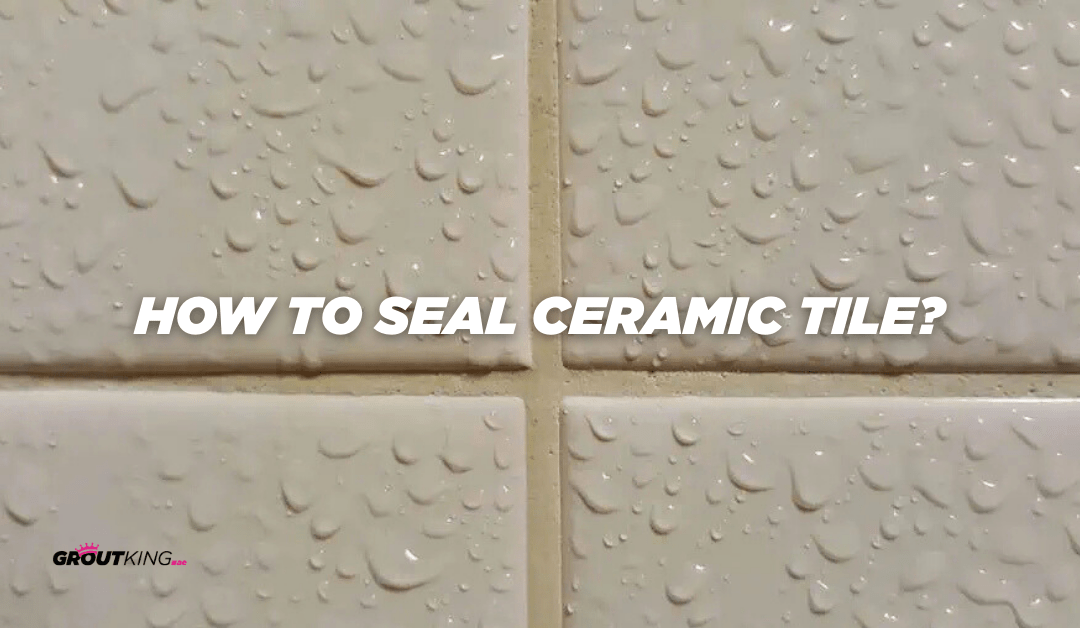
- If sealed, Water beads up on the surface without being absorbed, and the grout doesn’t darken.
- If unsealed, Water soaks into the grout, causing it to darken or change colour
If your surface is already sealed but the water test shows some absorption, it may be time for resealing.
Special Considerations for Wet Areas
Bathrooms, shower enclosures, and other wet areas require extra attention:
Choose the Right Sealer: Use a penetrating sealer specifically designed for wet areas that can handle constant moisture exposure.
Seal All Grout Lines: Pay particular attention to shower walls, floors, and areas around bathtubs where water exposure is frequent.
Address Existing Problems: Before sealing, ensure there are no existing moisture issues, damaged grout, or mould growth. Furthermore, these problems must be resolved first, as sealing will trap them underneath.
Consider Epoxy Grout: For new installations in wet areas, consider epoxy grout, which is naturally water-resistant and requires no sealing.
Stripping and Reapplying Ceramic Tile Sealer
If you need to remove the old sealer before reapplying:
- Use a commercial sealer stripper appropriate for your sealer type.
- Apply according to the manufacturer’s instructions.
- Scrub thoroughly to remove all old sealer residue.
- Rinse completely and allow to dry fully.
- Proceed with the new sealer application.
Tips for Sealing Tile Walls
Sealing vertical surfaces presents unique challenges:
- Work from bottom to top to catch any drips.
- Use a smaller applicator for better control.
- Apply lighter coats to prevent runs.
- Have clean cloths ready to quickly wipe any excess.
- Allow adequate drying time between coats.
How Long Does Tile Sealer Take to Dry?
Drying and curing times vary by product type:
- Initial drying: 15 minutes to 2 hours.
- Light traffic: 1-2 hours.
- Regular use: 24 hours.
- Full cure: 48-72 hours.
Always follow the manufacturer’s specific recommendations, as environmental factors like temperature and humidity affect drying times—particularly relevant in the UAE’s climate.
A Word of Caution About Homemade Tile Cleaners
Whilst many DIY cleaning solutions exist online, exercise caution when using homemade cleaners on sealed tiles:
- Acidic substances (vinegar, lemon juice) can break down certain sealers.
- Harsh alkaline cleaners may damage grout.
- Abrasive materials can scratch tile surfaces.
- Stick to pH-neutral cleaners specifically designed for sealed tile and grout.
How to Make Ceramic Tile Less Slippery
If your sealed ceramic tiles have become slippery, particularly in wet areas:
- Choose a matte or textured finish sealer rather than a high-gloss sealer.
- Consider anti-slip additives that can be mixed with certain topical sealers.
- Apply anti-slip treatments specifically designed for ceramic tile.
- Ensure proper cleaning to remove soap scum and residues that increase slipperiness.
Making the Most of Your Ceramic Tile Investment
Proper sealing is just one aspect of comprehensive tile care. To maximise your investment:
- Establish a regular cleaning routine using appropriate products.
- Address spills promptly, especially in food preparation areas.
- Schedule professional deep cleaning and resealing as needed.
- Inspect grout regularly for signs of damage or wear.
- Consider professional tile and grout restoration services from Grout King for heavily soiled or damaged surfaces.
Professional Sealing Services in Dubai
Whilst sealing ceramic tile can be a DIY project, professional application offers several advantages:
- Expert assessment of your specific tile and grout type.
- Access to commercial-grade sealers is not available to consumers.
- Proper surface preparation and deep cleaning.
- Even an application without mistakes or missed areas.
- Time savings and convenience.
- Long-term cost effectiveness.
Grout King specialises in professional tile and grout sealing services across the UAE, using industry-leading products and techniques to deliver superior, long-lasting results.
Conclusion
Understanding how to seal ceramic tile properly is essential for maintaining beautiful, hygienic, and long-lasting tiled surfaces. By following the proper preparation, application, and maintenance procedures outlined in this guide, you can protect your tile investment and keep your surfaces looking pristine for years to come.
Remember that whilst the ceramic tile itself may not require sealing, the grout between tiles absolutely does. Regular sealing—typically every 12-18 months—combined with proper cleaning and maintenance, will prevent staining, moisture damage, and costly repairs.
If you’re uncertain about tackling this project yourself or dealing with extensive tiled areas in your Dubai property, the professional team at Grout King is here to help. With our expertise in grouting services, professional cleaning, and sealing applications, we’ll ensure your ceramic tile surfaces receive the protection they deserve.
For expert grouting services and professional tile sealing in Dubai, contact Grout King today and let us help you maintain the beauty and integrity of your tiled surfaces.