
When it comes to maintaining beautiful flooring in Dubai’s climate, a common question arises: Does porcelain tile need to be sealed? The short answer is that whilst glazed porcelain tiles themselves rarely require sealing due to their non-porous nature, the grout between them absolutely does. However, the complete picture is more nuanced, particularly for unglazed or textured porcelain tiles in high-traffic or moisture-prone areas.
Understanding Porcelain Tile and Its Properties
Porcelain is a type of ceramic tile classified as impervious, meaning its water absorption rate is just 0.5% or less. This exceptionally low porosity makes the porcelain clay itself highly resistant to staining and moisture penetration. Nevertheless, not all porcelain tiles are created equal, and understanding the differences is crucial for proper maintenance.
Glazed porcelain tiles feature a glass-like coating over the surface, providing an additional layer of protection that makes them even more stain-resistant. In contrast, unglazed porcelain tiles, whilst still highly durable, can have microscopic out-gassing voids that may trap stains if spills aren’t cleaned promptly. Furthermore, textured or polished finishes can affect how the tile responds to various substances and cleaning methods.
Why Grout Sealing Is Essential
Regardless of whether your porcelain tiles need sealing, the grout joints certainly do. Cementitious grout is porous by nature, making it vulnerable to staining, discolouration, and mildew growth, especially in Dubai’s humid conditions. Consequently, sealing your grout provides several important benefits:
- Enhanced Cleanability: Sealed grout resists dirt, grime, and residue, making routine cleaning significantly easier and more effective.
- Stain Prevention: Unsealed grout readily absorbs spills, oils, and moisture, leading to permanent discolouration. Sealing creates a protective barrier that prevents these substances from penetrating.
- Mould and Mildew Resistance: In high-moisture areas like bathrooms and kitchens, sealed grout is far less likely to develop mould or mildew, which can cause dark staining on light-coloured grout.
- Extended Lifespan: Properly sealed grout maintains its structural integrity longer, reducing the need for costly repairs or replacement.
When Should You Seal Porcelain Tile?
Whilst many glazed porcelain tiles don’t require sealing, certain situations benefit from this additional protection:
For Unglazed or Textured Tiles
Unglazed porcelain may have microscopic pores that can trap dirt and stains over time. Sealing these tiles creates a protective layer that simplifies cleaning and maintains the tile’s appearance. Additionally, textured surfaces with grooves or patterns can harbour debris more easily, making sealing particularly beneficial.
For Polished Tiles
Some polished porcelain tiles are more susceptible to staining despite their smooth finish. The polishing process can occasionally expose tiny pores that weren’t visible in the original surface. Therefore, sealing polished tiles can provide extra protection against spills and wear.
For High-Traffic Areas
Entryways, hallways, and commercial spaces experience constant foot traffic that can gradually wear down even the most durable surfaces. Sealing provides an additional protective layer that helps tiles withstand this daily wear, whilst making maintenance easier.
For Outdoor Applications
Outdoor porcelain tiles in Dubai are exposed to harsh conditions, including intense sunlight, dust, and occasional rainfall. Sealing makes cleaning considerably easier and prevents staining, particularly in areas beneath dense foliage or zones with high footfall.
Before Grouting Unglazed Tiles
When using a lighter grout with darker unglazed tiles, or vice versa, pre-sealing the tiles before grouting prevents the grout from staining the tile surface during application. This precautionary step is especially important with contrasting colours.
The Benefits of Sealing Your Porcelain Installation
Even when not strictly necessary, sealing your porcelain tiles and grout offers several advantages:
- Easier Maintenance: Sealed surfaces repel dirt, grime, and stains, preventing them from settling into microscopic pores. This means less scrubbing and a more straightforward routine cleaning.
- Longer-Lasting Beauty: Sealing protects your investment by preventing spills, dirt, and daily wear from degrading the appearance of your flooring. This helps maintain the original lustre and colour of both tiles and grout.
- Prevention of Discolouration: Light-coloured grout is particularly vulnerable to darkening from mould, mildew, and everyday stains. Sealing significantly reduces this risk.
- Improved Cleaning Efficiency: With a properly sealed surface, cleaning products work more effectively, and many spills can be wiped away with just water before they have a chance to penetrate.
How to Properly Seal Porcelain Tile and Grout
Applying the sealer correctly is crucial for achieving optimal results. Here’s a comprehensive approach:
Preparation Is Key
First and foremost, ensure your tiles and grout are completely clean and thoroughly dry. Any existing stains will be trapped beneath the sealer, becoming permanent. Moreover, moisture trapped under the sealer can lead to haziness or reduced effectiveness.
Application Process
Use a clean, lint-free cloth or applicator pad for application. A plastic spray bottle allows you to mist the sealer evenly over the surface. Apply more sealer to grout joints than to the tiles themselves, as grout will absorb significantly more product.
Once you’ve sprayed the sealer, immediately spread it around and wipe up any excess. This step is critical because excess sealer left on impervious glazed tile won’t absorb and can create a sticky residue that becomes a maintenance nightmare.
As your cloth becomes damp with sealer, you can simply spray grout joints and use the damp cloth to apply the product to adjacent tiles whilst wiping away excess. When the cloth becomes too saturated to effectively remove excess sealer, switch to a fresh, dry cloth.
Testing for Effectiveness
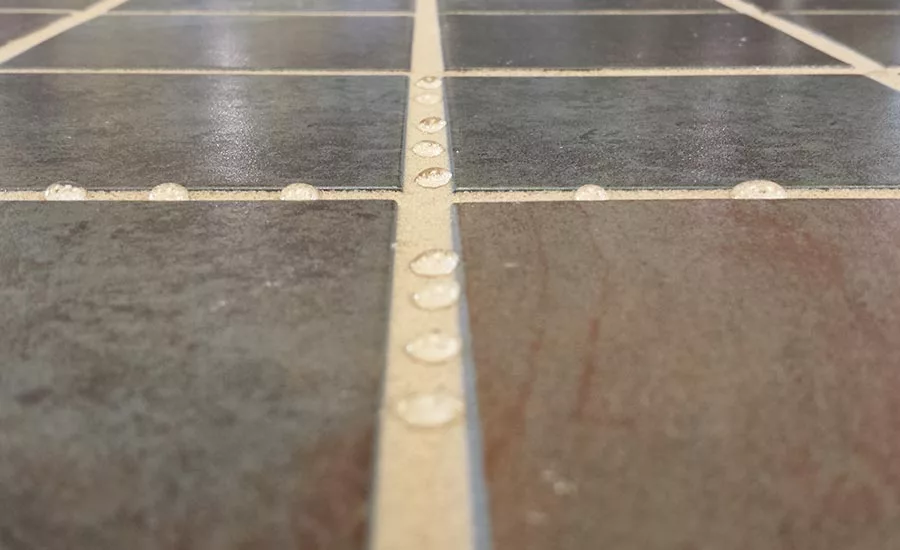
After application, test the sealer by placing water droplets on both the tile and grout. If the sealer is working properly, water should bead up like water on wax. If the grout darkens significantly, the sealer has either worn away or wasn’t applied adequately.
Understanding Different Types of Tile Sealers
Penetrating VS Surface Sealers
Penetrating sealers absorb into the material, protecting within without altering the surface appearance. These are ideal for natural stone and unglazed porcelain.
Surface sealers create a protective coating over the top of the material. Whilst they can provide enhanced stain resistance, they may alter the appearance slightly and can wear more quickly in high-traffic areas.
Polyurethane VS Acrylic Sealers
Polyurethane sealers offer robust protection and excellent durability, making them suitable for high-traffic commercial applications. However, they can sometimes create a slightly plastic appearance.
Acrylic sealers provide good protection whilst maintaining a more natural look. They’re easier to apply and typically more affordable, though they may require more frequent reapplication.
Water-Based VS Solvent-Based Sealers
Water-based sealers are environmentally friendly, have low odour, and clean up easily with water. They’re ideal for residential applications, particularly in enclosed spaces.
Solvent-based sealers penetrate more deeply and often last longer, but they emit strong fumes during application and require chemical cleanup. They’re typically reserved for commercial or outdoor applications.
When Is the Best Time to Seal Porcelain Tile?
Timing matters significantly when sealing your porcelain installation:
After Installation: Allow newly installed tiles and grout to cure completely before sealing. Cementitious grout typically requires 48-72 hours of curing time, though some products may need up to two weeks. Always consult the grout manufacturer’s recommendations.
Before Grouting Unglazed Tiles: If you’re working with unglazed porcelain and contrasting grout colours, seal the tiles before grouting to prevent grout haze and staining.
Seasonal Considerations: In Dubai, avoid sealing during the height of summer humidity when drying times are extended. Cooler months provide optimal conditions for sealer application and curing.
Maintenance Schedule: Reapply sealer periodically based on wear patterns. High-traffic areas may need resealing annually, whilst low-traffic spaces might only require attention every 2-3 years.
How to Determine If Your Tile Has Already Been Sealed
If you’re uncertain whether your existing porcelain tile has been sealed, perform this simple test:
Place several drops of water on both the tile surface and grout joints. Observe the results after a few minutes. If the water beads up and doesn’t absorb, the surface is sealed. If the water is absorbed and the area darkens, the surface is unsealed, or the previous sealer has worn away.
This test helps you determine whether resealing is necessary and which areas require attention.
Special Considerations for Wet Areas
Bathrooms, shower surrounds, and kitchen backsplashes present unique challenges. In these high-moisture environments, proper sealing becomes even more critical for grout, as constant exposure to water accelerates staining and mildew growth.
However, ensure you’re using a breathable sealer that allows moisture vapour to escape whilst blocking liquid water penetration. Additionally, proper waterproofing membranes beneath the tile installation provide essential protection that sealing alone cannot offer.
Addressing Slippery Porcelain Tile
Polished porcelain tiles can become slippery when wet, which is a safety concern in bathrooms and outdoor areas. Some anti-slip sealers incorporate additives that increase traction without significantly altering the tile’s appearance. Alternatively, textured or unglazed porcelain tiles naturally offer better slip resistance in wet conditions.
Professional Grout and Tile Services in Dubai
Whilst DIY sealing is certainly possible, professional application ensures optimal results and longevity. Grout King, based in Dubai, UAE, specialises in comprehensive grouting services, including grout sealing, cleaning, and restoration.
With expertise in both residential and commercial applications, Grout King understands the unique challenges posed by Dubai’s climate and can recommend the most appropriate sealing solutions for your specific situation.
Whether you’re dealing with stubborn grout stains, need professional sealing services, or require complete grout restoration, Grout King’s experienced team provides reliable solutions tailored to your needs.
Making the Right Decision for Your Home
So, does porcelain tile need to be sealed? The answer depends on several factors: the type of porcelain (glazed or unglazed), the finish (polished, textured, or matte), the location (wet areas, high-traffic zones, or outdoor spaces), and your maintenance preferences.
For most glazed porcelain tiles, sealing isn’t strictly necessary, but it can make cleaning easier and provide additional protection. However, always seal your grout to prevent staining, discolouration, and mildew growth. Moreover, unglazed and textured porcelain tiles typically benefit from sealing, particularly in demanding environments.
Ultimately, whilst sealing represents an additional step in tile maintenance, the benefits—easier cleaning, enhanced stain resistance, and prolonged beauty—make it a worthwhile investment for most installations. When in doubt, consult with professionals like Grout King who can assess your specific situation and provide expert recommendations tailored to your needs.
By understanding the properties of your porcelain tiles and implementing appropriate sealing practices, you’ll enjoy beautiful, easily maintained flooring for years to come in your Dubai home or business.